On May 17, 2025, at the China Digital Architecture Conference, Meng Jianmin, Chief Architect of Shenzhen General Institute of Architectural Design and Research (SZGDI), officially announced that the world's first "Artificial Intelligence Institute of Architectural Design and Urban Construction" (hereinafter referred to as the "AI Institute"), led by him, will officially commence preparations in Shenzhen. Guided by the Shenzhen Science and Technology Innovation Bureau, with SZGDI as the lead unit, the AI Institute will be established by a preparatory consortium formed in collaboration with several core institutions including Shenzhen Smart City Technology Development Group, Shenzhen Special Economic Zone Construction and Development Group, Shenzhen Urban Planning and Design Institute, and Leaguer Science and Technology. Multiple technology organizations such as Glodon, Alibaba Cloud, Rabbut Intelligent, and Liangzhen Technology are participating in its joint construction, with Tsinghua University, Peking University, Shenzhen University, and other universities or their affiliated research institutions providing technical and talent support.
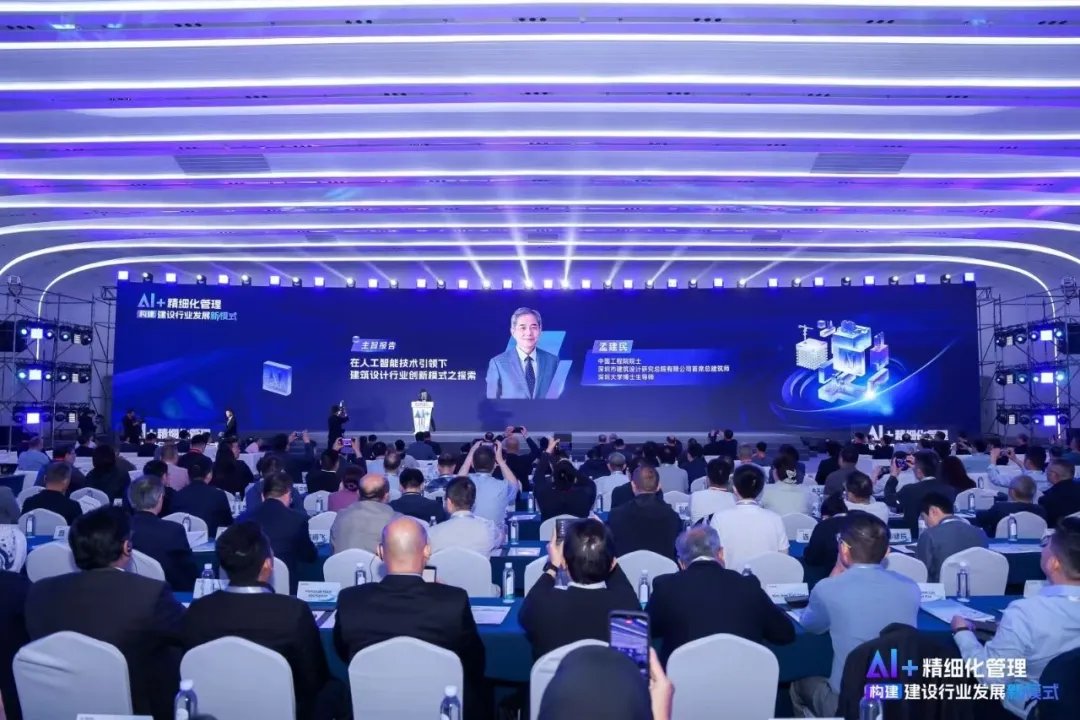
The establishment of this new research institution not only marks an important milestone in Shenzhen's construction as a "Global Pioneer City in Artificial Intelligence" but also signifies that China's architectural design industry has entered a new development phase centered on data-driven productivity and online collaboration. Professor Meng Jianmin stated that the AI Institute is committed to solving the industry's long-standing efficiency bottlenecks and data silo problems, reshaping the architectural design value chain through technological innovation, and providing crucial support for smart city construction.
Currently, the architectural design industry is facing unprecedented challenges and opportunities. With the rapid development of emerging fields such as digital cities, autonomous driving, and the low-altitude economy, the demand for high-precision, structured building data in cities has grown dramatically. However, traditional architectural design models rely on manual experience, design tools are highly fragmented, and data is scattered across design, construction, operation, and maintenance phases, forming "information silos" that are difficult to integrate, making it challenging to adapt to the rapid development of innovative technologies and the needs of urban construction. Professor Meng pointed out that this problem not only leads to low design efficiency but also severely constrains the process of urban digital management.
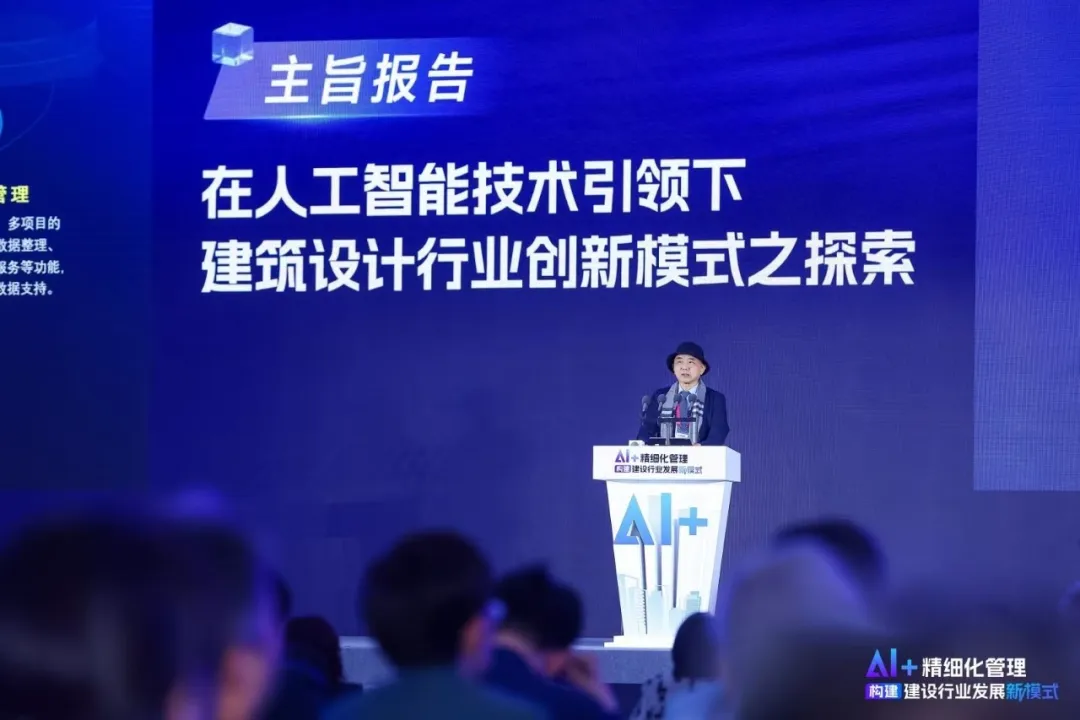
Against this backdrop, the establishment of the AI Institute is entrusted with a mission to break through these barriers. Professor Meng emphasized that the core objective of the Institute is to develop AI-assisted design tools covering the entire building lifecycle, build an integrated collaborative design platform, and establish the country's first city-level building database through a three-pronged strategy of "tool revolution, platform empowerment, and data foundation building," providing underlying data support for smart cities.
Discussing the opportunity for establishing the Institute, Professor Meng noted that with the development of design tools and the needs of urban construction, the core value of architectural design is shifting from "doing design" to "doing data." The Institute has three clear core objectives: First, to aggregate industry data to support smart city construction. The Institute plans to collaborate with leading design enterprises and technology companies to jointly establish standards for AI data collection and use, and widely collect industry data based on these standards. Second, to develop a comprehensive set of AI architectural design tools for the entire process. The Institute will integrate technical capabilities from various parties to develop AIGC-based assisted design software and integrate various existing AI design tools onto a single platform, forming a functionally complete, efficient, and practical comprehensive AI design toolset for use by the entire industry. Third, to reshape the AI architectural design business model. Through the application of AI technology, it aims to break through data format barriers in traditional design processes, achieve online multi-disciplinary collaborative design and structured data management, break down data silos and information barriers, and form a new design paradigm.
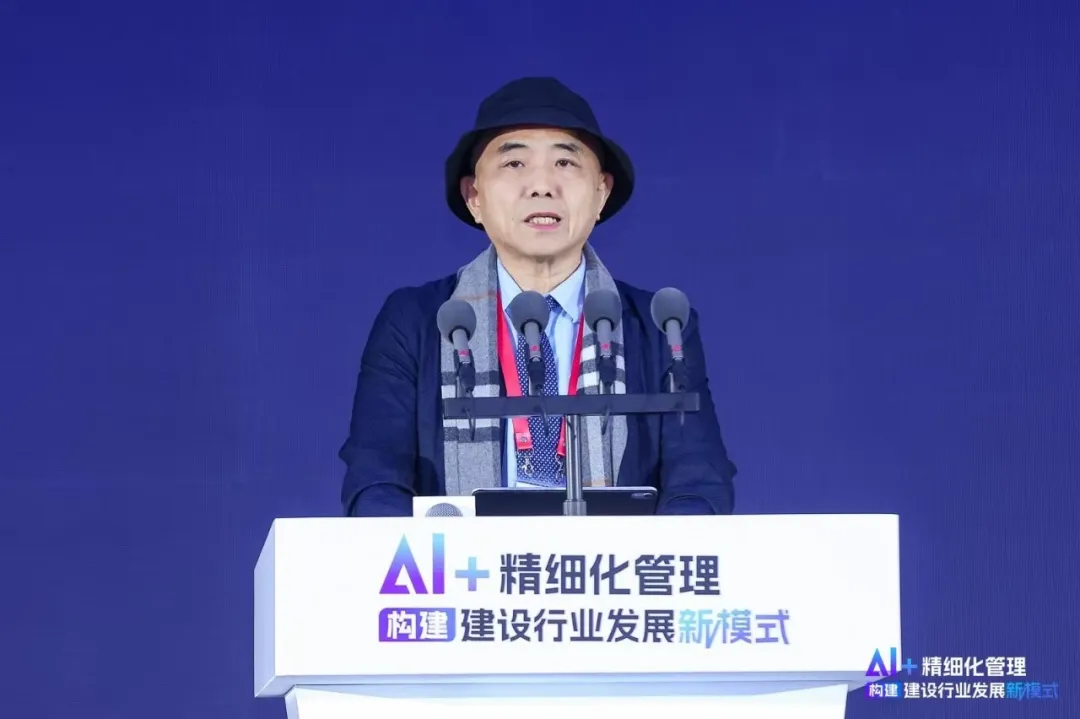
Regarding the Institute's role in promoting high-quality industry development, Professor Meng expressed full confidence. He introduced that the Institute is expected to achieve a series of fruitful results. In terms of design tools, it plans to launch several breakthrough AI design tools, such as AIGC-assisted architectural scheme design tools and construction drawing AI automation design tools, which will significantly enhance design efficiency and quality. The Institute will also build a comprehensive digital platform for all architectural design disciplines, featuring three core functions: software integration and application, multi-disciplinary online design, and data collection and transmission. Designers can efficiently complete their work on the platform, while also achieving functions such as automatic drawing review, automatic quantity calculation, and automatic permit application for design outcomes. Industry regulatory authorities can also conduct business management and project approval through this platform. The Institute is also committed to forming a globally leading city-level dataset. By integrating various types of building data, it aims to create significant advantages in data scale, quality, and real-time performance, not only providing strong support for Shenzhen's smart city construction but also offering a scientific basis for government policy-making and industrial planning, helping Shenzhen and even the nation advance in the field of artificial intelligence.
Currently, under the guidance of Professor Meng Jianmin, the preparatory work for the "Artificial Intelligence Institute of Architectural Design and Urban Construction" is progressing steadily. He stated that this is an open, jointly built platform, welcoming all design enterprises, technology companies, and research institutions to join. It carries the hope for innovation and transformation in the architectural design industry, will become a new engine driving urban construction and industry development, and usher in a new AI era for the architectural design industry.


